You Can’t Protect What You Can’t See.

John Ortiz
Creator of My Protection Score™ Assessment
August 22, 2026.
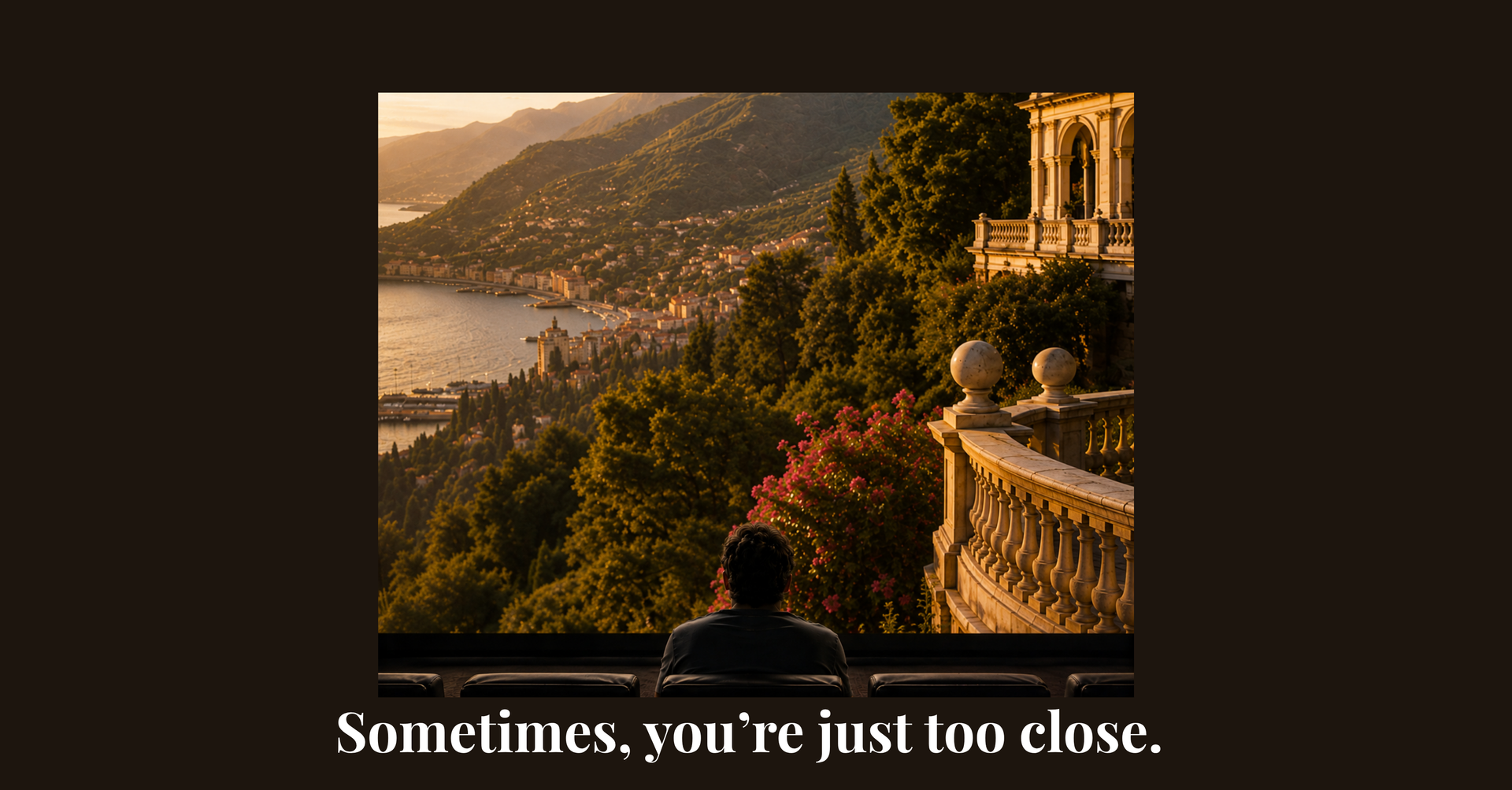
The movie hadn't even started yet, and we already knew we'd made a mistake.
My family and I were sitting in the front row, about 15 feet from the screen. The movie trailers were enough. We could see plenty, just not the whole picture.
So we got up.
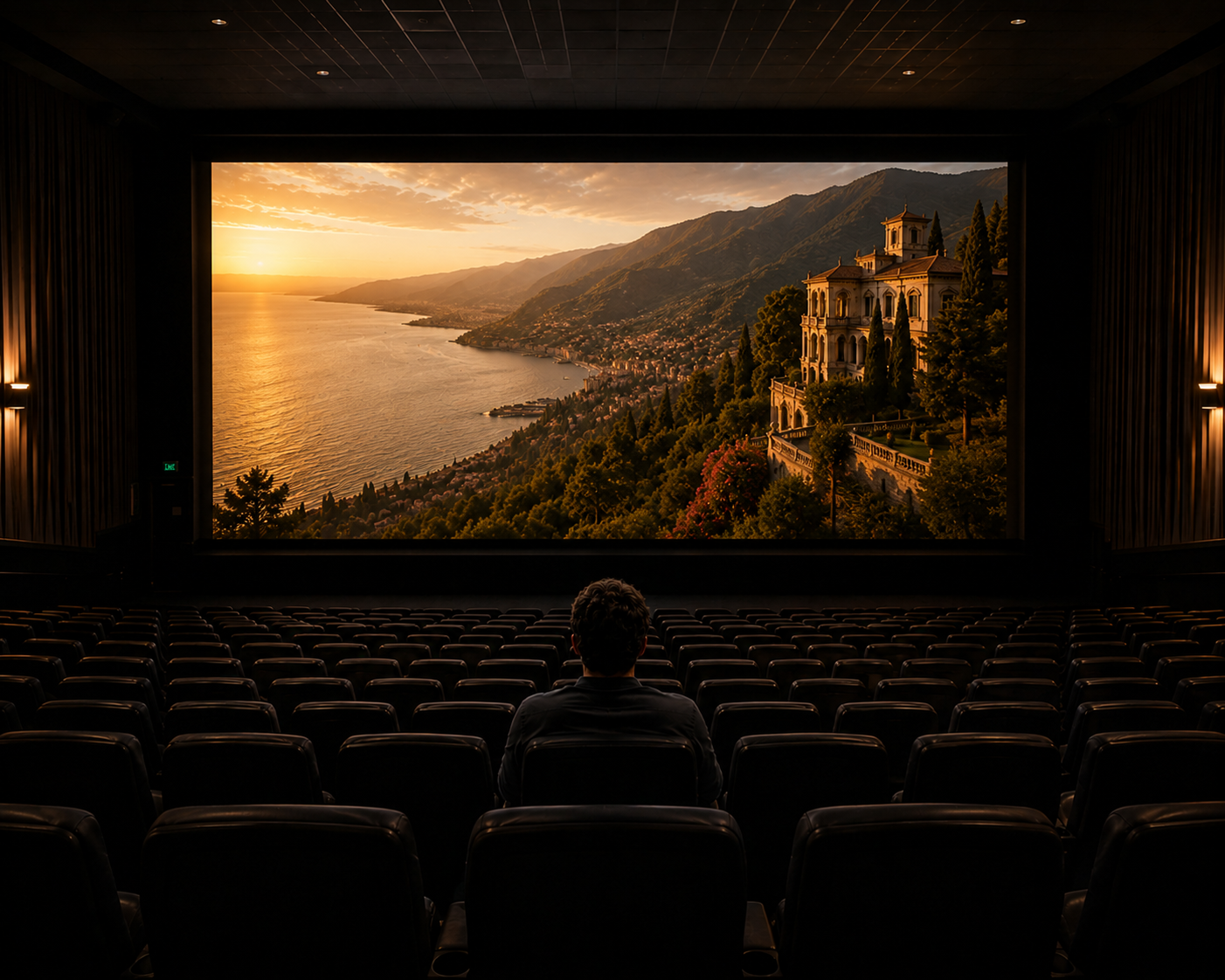
We moved our tickets to another day and came back. This time, we sat about three-quarters of the way up the theater.
Same screen. Same movie. Completely different experience.
From there, we could see everything. Left to right. Top to bottom.
We hadn't changed what we were looking at.
We changed where we were looking from.
I think life can work the same way.
You know your life because you live it every day. You know your family. You know your work. If you own a business, you know your business. You know the bills that come in and the money that goes out.
And still, there is another phrase we've all heard:
Out of sight. Out of mind.
How many times have you looked at a recurring charge and thought, Wait. I thought that was still about eight bucks a month.
It isn't that someone hid the new price from you. You've probably been paying it for months.
You just stopped looking.
A lot of our financial life works that way now.
Tap.
Click.
Autopay.
Done.
That's convenient. I use those conveniences too. But convenience can remove some of the moments that used to make us notice what we were spending. Research into payment behavior has found that the payment process can affect our subjective awareness of spending.
Years ago, paying a bill might have meant writing the name of the company, the date, the dollar amount, writing the amount again in words, and signing your name. You interacted with that number.
Today, an expense can quietly leave your account every month without requiring much attention from you at all.
And we don't exactly have an abundance of attention sitting around unused.
There's work. Traffic. Kids. Appointments. Dinner. Email. The house. The business. Maybe aging parents. Then tomorrow morning, we get up and start again.
That's not irresponsibility.
That's everyday life.
I've seen the consequence of this when I sit down with people, and we actually put their numbers in front of them.
One of the most common reactions I hear is some version of:
“Wow. I had no idea that was that much.”
I remember going through credit-card balances with someone when we reached the interest rates.
Twenty-one percent.
Another was twenty-eight.
Then we found one at thirty-six percent.
The reaction was immediate.
The important part of that story isn't what I thought about 36 percent.
It's that now they could see it.
And once they could see it, they had something they didn't have five minutes earlier:
A decision to make.
But a credit-card interest rate is a number.
Protection is bigger than that.
So what exactly am I suggesting you aren't seeing?
I think it starts with the difference between living your story and seeing the layers of your story.
You live the everyday layer constantly.
You get up. You go to work. You run your business. You get the kids where they need to go. You pay the mortgage. You buy groceries. You make plans for the weekend. You solve whatever problem Tuesday decides to put in front of you.
When that everyday layer is working, life can feel pretty straightforward.
Money comes in.
Bills get paid.
The family keeps moving.
Nothing is necessarily wrong.
And I'm not suggesting that something secretly is.
That's important.
I'm not asking you to go looking for problems.
I'm asking you to look at your story from a little farther back.
Because while you can see how your life works today, what may be harder to see is how your life would work if something changed.
Not every possible thing.
There aren't enough hours in the day for that, and I wouldn't want to live that way either.
Emergencies don't schedule themselves. Life doesn't send you a calendar invitation before it changes.
But we don't have to predict the event to understand where pressure could land.
In my work, I've found that most of the protection conversation can be organized under three broad areas: legacy, critical illness or injury, and financial exposure.
They put pressure on a story in different ways.
Legacy is the most absolute. You're no longer there, but the people who depended on you are. They still have a life to live. There are bills, plans, hopes, responsibilities, and dreams that existed when you were part of the story.
Critical illness or injury is different. You're still here, but your ability to participate in everyday life may change.
Maybe you can't work for a period of time. Income changes while expenses continue. Someone else may need to step away from work to help. Savings that had another purpose may suddenly have a new job.
It can feel less like one giant financial event and more like a boat taking on water through several small holes at once.
Then there is financial exposure. Sometimes the change is not absolute. Nobody gets seriously sick. Life simply presents a financial pressure, and the choices available to you depend partly on what was built before the pressure arrived.
That's why I don't think protection is really about trying to control everything that could happen.
And I certainly don't think you should live your life on defense.
I think it's about understanding your story well enough to see where pressure could change it.
Because once you can see that, you can ask a much better question:
If life changed here, what choices would we have?
I learned this lesson the hard way in my own home.
When my mother-in-law entered hospice, the onboarding nurse recommended that we bring in a hospital bed. She had been working in hospice for nearly 20 years.
I didn't listen.
We decided to use a regular bed instead. At the time, it seemed like the better choice for our home and our family.
Then I became her caregiver.
For months, I was bending, reaching, repositioning her, helping her get into bed and helping her get back out. Over time, my back started to feel it.
Near the end of her time with us, we finally brought in the hospital bed.
What a difference.
I could raise the bed when I was caring for her. I could lower it when she needed to get out. Tasks that had required me to bend and stretch became easier.
I remember telling my wife, “This bed is so much better than the bed we had before. I have no idea why I didn't listen to that nurse seven months ago.”
But eventually I understood why.
Seven months earlier, I was looking at a bed.
This is paragraph text. Click it or hit the Manage Text button to change the font, color, size, format, and more. To set up site-wide paragraph and title styles, go to Site Theme.
She was looking at caregiving.
She had nearly 20 years of hospice experience. She could see months of lifting, bending, repositioning, and physical strain inside a decision that, to me, was simply about which bed we should put in the room.
She didn't know my family better than I did.
She wasn't entitled to make the decision for us.
She was simply standing somewhere I wasn't.
And from where she stood, she could see something I couldn't see yet.
That's an important distinction.
Nobody knows your life better than you do.
But sometimes nobody is closer to it than you are either.
Another set of eyes doesn't have to replace your judgment to improve your perspective. Sometimes another person can see something you can't, not because they know your story better, but because they're standing somewhere different.
Same story. Different vantage point.
And sometimes, that's enough to see what was there the whole time.
So what does any of this have to do with your financial life?
Maybe more than you think.
You can be responsible and still miss something.
You can pay every bill on time and still not notice that an expense has changed.
You can carry a credit card for years and not remember its interest rate.
You can know your family better than anyone in the world and still benefit from another vantage point.
That's not a character flaw.
It's what happens when you're living the story while trying to see the story at the same time.
And when something finally comes into view, I don't think the first response should be judgment.
I've had people sitting across from me, looking at their own numbers, say, “John, this is embarrassing. I should have known this.”
I hear that more often than you might think.
My response is usually some version of this:
Look at everything competing for your attention.
You have work to do. Maybe traffic in both directions. Kids who need to get somewhere. Dinner. Appointments. Emails. A house that needs something. A business that needs something. Maybe parents who need something too.
Then you go to sleep and start again tomorrow.
Something is eventually going to move into the background. So don't spend your energy beating yourself up over what you didn't see.
Now you see it.
That's what matters.
Because visibility doesn't tell you what to do. It gives you the opportunity to decide what, if anything, needs to be done. And that distinction matters when we start talking about protection.
I don't believe the objective is to build the biggest possible pile of protection around your life.
More isn't automatically the answer.
Your life and your protection should align. What that alignment looks like will be different for different people because the stories are different.
A family with young children has one story.
A couple approaching retirement has another.
A business owner may have employees, debt, equipment, partners, or obligations that add another layer.
Even two families that earn exactly the same amount of money may have completely different responsibilities, priorities, cash flow, and ideas about what they want their lives to look like.
So how could I possibly know what your protection should look like before I understand any of that?
I couldn't.
I would be guessing.
And your story matters too much for that.
That's why one of the ideas at the center of how I work is very simple:
Your story matters. Therefore, I shouldn't guess.
If I shouldn't guess, I need to understand.
And understanding starts with questions.
Not questions designed to steer you toward an answer I've already chosen.
Questions that help bring the story into view.
What do you have?
What do you owe?
Who depends on you?
What does your everyday life actually cost?
What have you already put in place?
What matters enough to you that you would want it to continue if life changed?
The answers aren't there so I can take ownership of the decision.
They're there so you can.
Because I can bring experience.
I can ask questions.
I can help organize the numbers.
I can offer another vantage point.
But there is one thing I cannot bring to the conversation.
Your story.
Only you can do that.
And when we put those two perspectives together, something important happens.
Neither of us has to guess.
Maybe that's the real challenge.
We're so close to our own lives that sometimes we mistake proximity for perspective.
We know the schedule.
We know the people.
We know what needs to happen tomorrow morning.
We know which bill is due next.
We know the business.
We know the routine.
And because we know all of that, it's easy to assume we're seeing the whole picture.
Sometimes we are.
Sometimes we're not.
The goal isn't to become suspicious of your own life or start searching for everything that could possibly go wrong.
It's simply to create enough distance every once in a while, to look again.
Maybe it's an expense you haven't looked at recently.
Maybe it's an interest rate.
Maybe it's an old financial plan built around a life that has changed since then.
Maybe it's a responsibility that has quietly grown.
Or maybe you look at everything and realize you're exactly where you thought you were.
That's valuable too.
Seeing clearly doesn't require finding something wrong.
It requires being willing to look.
Because once something is visible, you can evaluate it.
You can compare.
You can ask questions.
And ultimately, you can decide.
Your decision may be to change something.
Your decision may be to leave it exactly as it is.
Either way, it belongs to you.
I think back to that movie theater.
The screen wasn't the problem.
The movie wasn't the problem.
We were simply too close.
A few days later, we came back and sat farther up.
Same screen.
Same movie.
Different vantage point.
And suddenly, we could see the whole thing.
Maybe there is one part of your story worth looking at again.
Not everything.
Just one thing.
Move back a few rows.
Look again.
Because you can't protect what you can't see.